Securing a residential property requires prompt pest control services Pittsburgh homeowners rely on to eliminate active biological intrusions and seal structural vulnerabilities against recurring infestations. Older multi-family properties and historic brick homes face distinct regional pressures, from Norway rat infiltration along aging sewer channels to subterranean termite migrations across river valley soils.

A pest control services company in Pittsburgh is an environmental remediation provider that diagnoses active insect and rodent activity, eliminates internal colonies, and physically seals structural entry points in residential and commercial foundations across Allegheny County.
Every service reflects the same meticulous attention to detail, whether it's a single job or a larger pest control services project across Pittsburgh.
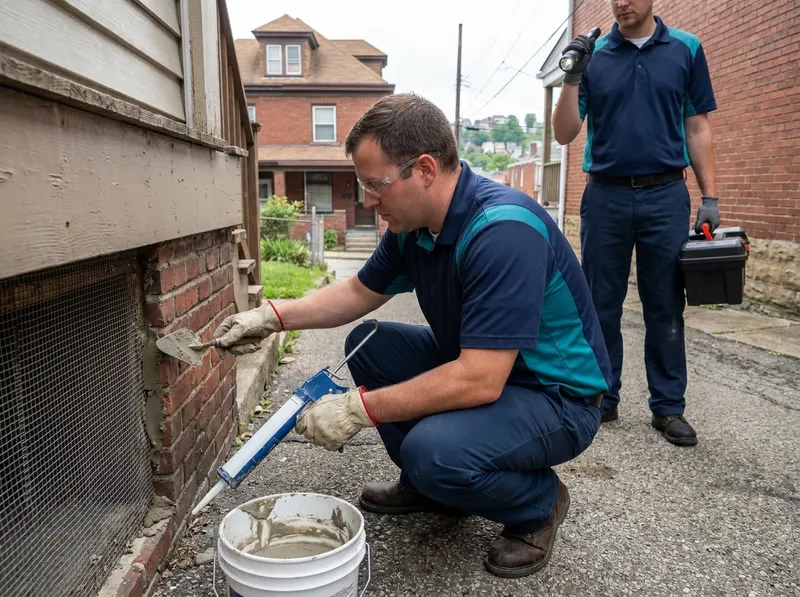
Subterranean rodent management pairs mechanical indoor snap trapping with high-gauge copper mesh and hydraulic cement repairs across basement mortar voids, sealing primary entry pathways used by Norway rats and field mice entering residential sill plates. Technicians inspect cellar walls, unexcavated dirt crawls, and pipe penetrations to eliminate entry apertures down to one-quarter inch in diameter. Strategic mechanical traps installed along floor joist perimeters quickly remove trapped indoor populations without creating foul odor issues behind drywall or finished basement paneling. Perimeter tamper-resistant bait stations outside foundation perimeters suppress external population pressures migrating from nearby storm culverts, alleys, and municipal sewer mains.
Get a quote →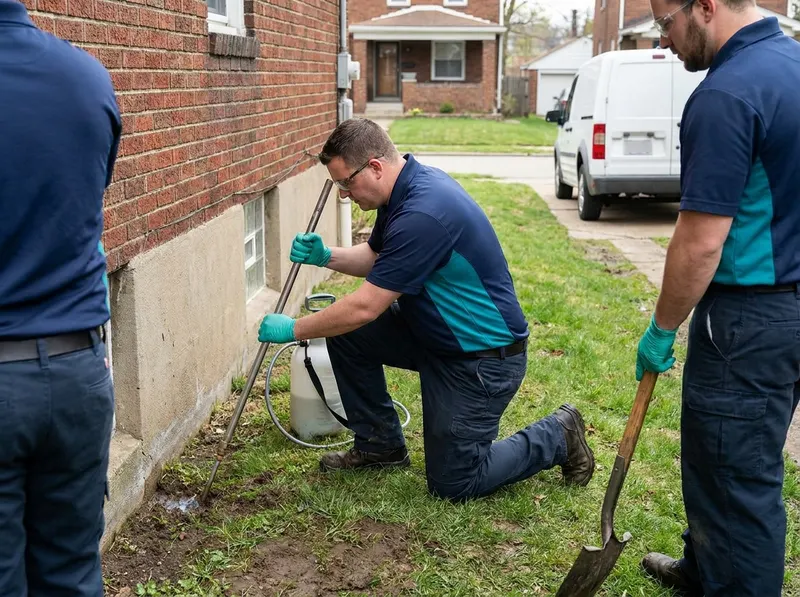
Termite remediation deploys non-repellent liquid termiticides trench-injected along perimeter load-bearing foundations or targeted exterior monitoring bait stations to neutralize underground colonies before wood structural members lose load integrity. Liquid termiticide barriers bind directly with clay and shale soils, creating an undetectable continuous chemical envelope that foraging worker termites track back to subterranean nurseries. Drilling through concrete slabs, garage aprons, and exterior brick walkways ensures uniform coverage along concealed footers where mud tubes originate. Technicians perform follow-up acoustic and moisture meter assessments along finished basement baseboards to verify colony suppression and prevent hidden wood decay.
Get a quote →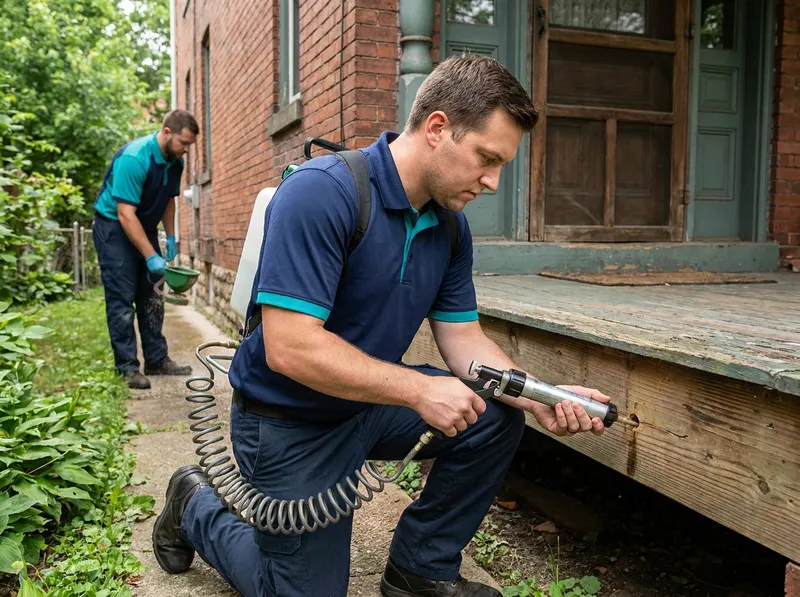
Carpenter ant management pinpoints moist framing behind flashing, box gutters, and sill plates, applying localized micro-injections directly into active nesting galleries rather than relying solely on superficial exterior aerosol perimeter sprays. Certified applicators trace outdoor foraging trails traveling along utility lines and overhanging tree limbs to locate hidden satellite colonies inside roof eaves and bay window wall framing. Non-repellent transfer formulas allow parent and satellite colonies to share insect growth regulators, halting egg production and eliminating wood excavation inside damp studs. Structural repair recommendations follow each diagnostic assessment to eliminate the persistent moisture leaks that attract satellite nesting colonies.
Get a quote →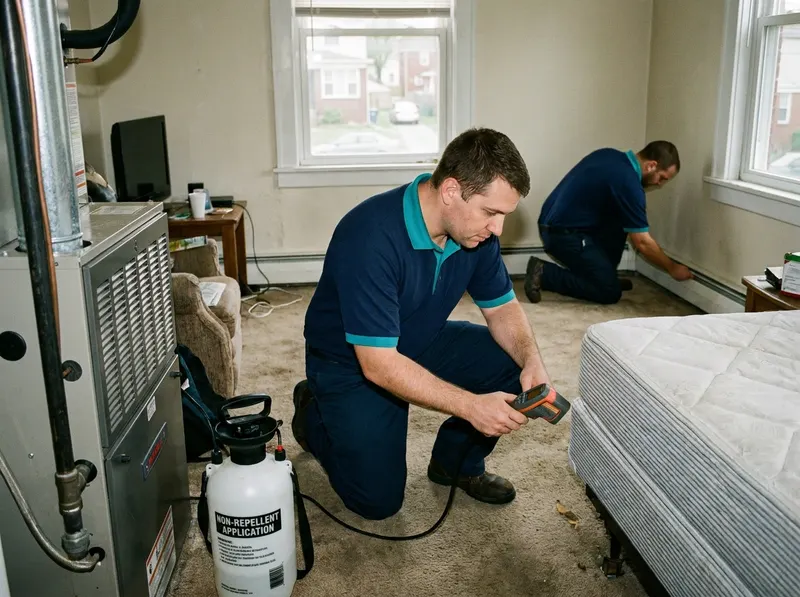
Multi-unit bed bug remediation applies localized heat remediation combined with direct-contact non-repellent residual insecticides to baseboards, mattress perimeters, and electrical outlet recesses, neutralizing all life stages including eggs within single-treatment protocols. Controlled industrial thermal fan units circulate ambient temperatures exceeding 122 degrees Fahrenheit into dense fabrics, structural wall cavities, and hollow furniture legs. Precision residual liquid applications provide secondary residual protection that neutralizes any nymphs emerging from deep structural fissures in older plaster walls. Follow-up visual inspections and passive interceptor monitors placed under bed frames verify complete population collapse across contiguous sleeping areas.
Get a quote →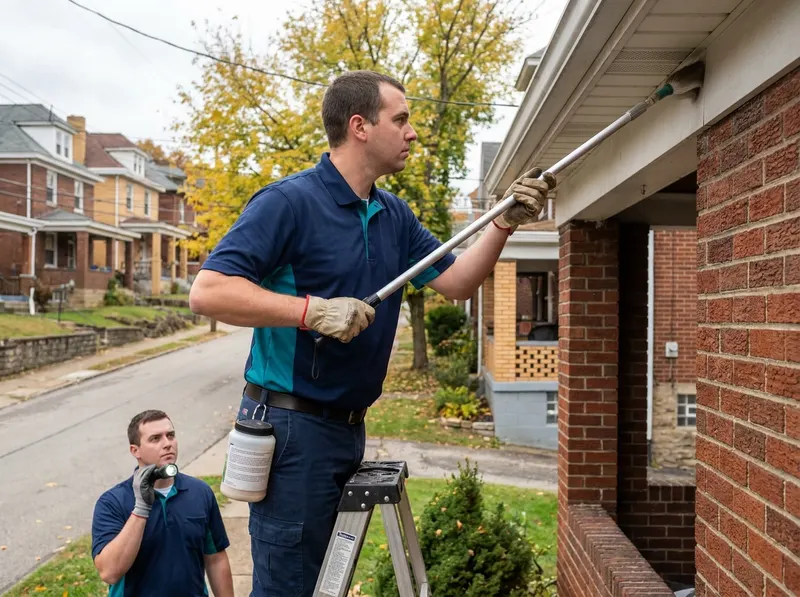
Hornet, paper wasp, and yellowjacket management targets active aerial nests and concealed exterior wall void colonies with pressurized insecticidal dusts and physical nest extractions to prevent internal wall chew-throughs during late summer peaks. When yellowjackets build nests behind exterior brick veneer or vinyl siding, specialized micro-bulb dusters inject residual compounds into the primary entrance hole, neutralizing the colony within twenty-four hours. Technicians physically remove exposed paper hives from tree branches, eaves, and attic rafters to eliminate biological attractants that lure secondary scavenging pests. Protective exclusion screens applied over attic gable vents and soffit seams prevent fertile inseminated queens from overwintering inside structural wall cavities.
Get a quote →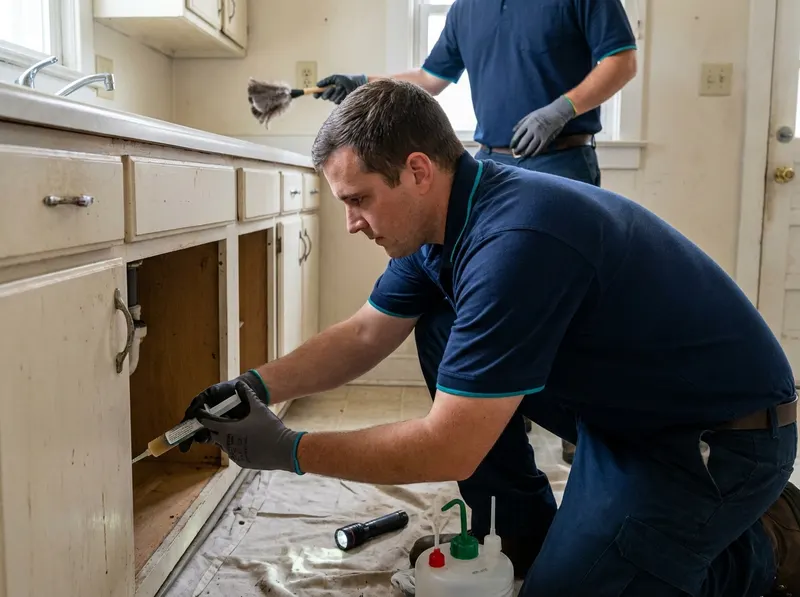
Cockroach control integrates juvenile growth regulators with precision insecticidal gel bait placements along warm appliance motors, pipe chases, and hinge hardware to collapse breeding cycles in commercial galleys and multi-family kitchens. Gel baits utilize attractive food matrices paired with slow-acting active ingredients, inducing secondary kill dynamics through cannibalism and fecal consumption in communal harborages. Non-repellent void injections flush populations out of hollow stainless steel legs, electrical junction enclosures, and behind loose ceramic wall tile. Regular rotating bait matrices prevent behavioral bait aversion, while continuous sticky insect monitors measure population drop-off over successive fourteen-day reproduction intervals.
Get a quote →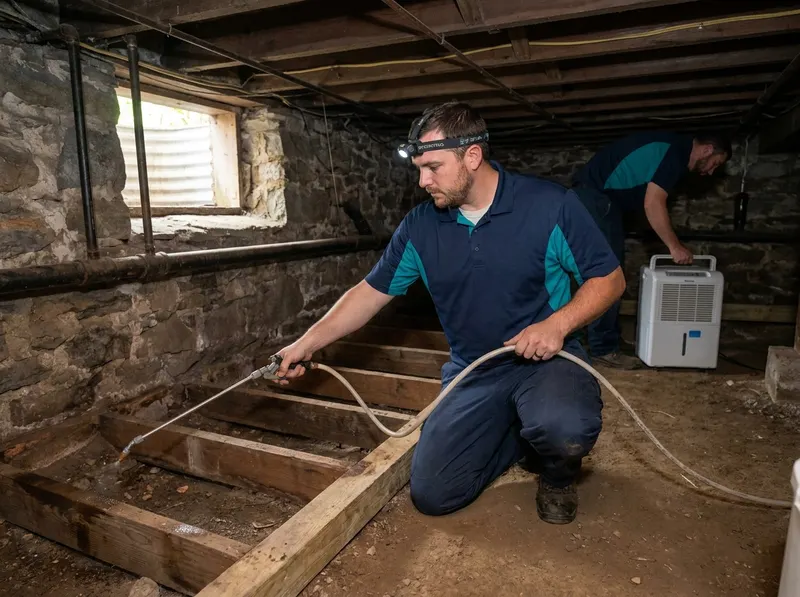
Damp foundation pest management resolves silverfish, centipede, and sowbug populations through foundation drainage assessments, targeted perimeter desiccants, and moisture-reducing vapor barrier recommendations in subterranean cellar levels. Porous foundation walls allow groundwater seepage that creates microclimates favored by damp-loving arthropods and millipedes. Inorganic borate and silica dust applications along mudsills, floor joist pockets, and structural support posts provide long-term barrier protection unaffected by ambient humidity. Technicians identify leaking plumbing fixtures, undersized sump pump wells, and saturated grading lines that drive perimeter biological infestations into lower-level living spaces.
Get a quote →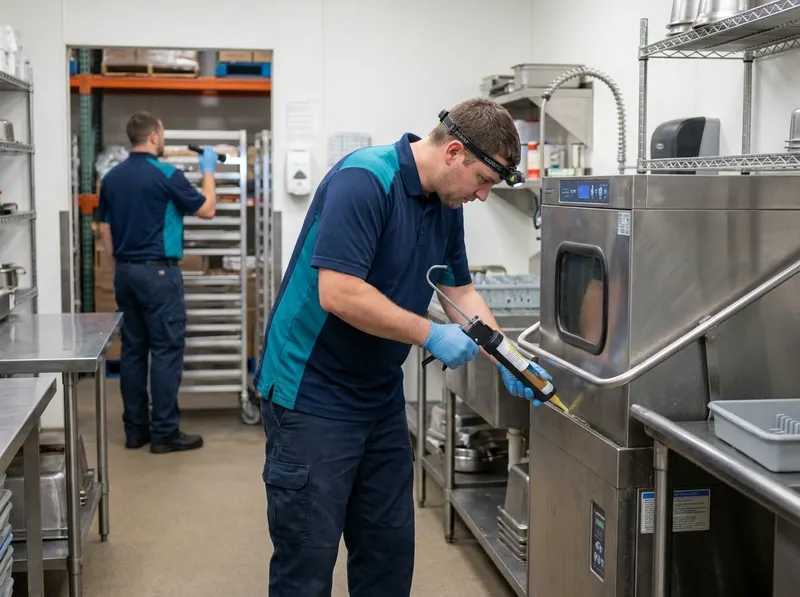
Commercial remediation delivers documented pest logging, exterior perimeter rodent bait station networks, and targeted non-food-contact crack-and-crevice treatments compliant with Allegheny County Health Department sanitary code standards. Detailed diagnostic reports catalog interior sanitation flaws, unsealed commercial roll-up door thresholds, and plumbing floor drain conditions. Routine bar-code-scanned bait stations installed along warehouse perimeters monitor and control outdoor rodent migrations near loading docks and waste compactors. Electronic reporting packages supply operations managers with trend analysis logs, material safety data sheets, and regulatory inspection verification records.
Get a quote →You get a firm, itemized quote for your pest control services before any work begins, no surprises, no pressure.
Careful prep, tidy work, and a full cleanup when we are done. We treat your home and belongings like our own.
The same trusted, background-checked team from the first call to the final check.
Selecting remediation requires matching physical structural traits with target pest biology. If structural timber displays gallery hollows or discarded swarm wings near foundation plate lines, choose a targeted subterranean termite liquid barrier or bait network. If scratching noises, droppings, and pipe-run gnaw marks appear inside basements or kitchen floor voids, select whole-home rodent exclusion and mechanical trapping.
The operational trade-off centers on upfront mechanical labor versus maintenance frequency: exterior structural sealing with metal mesh, hydraulic cement, and mortar requires higher initial labor across century-old foundations, but it systematically prevents cyclical re-entry. Conversely, exterior perimeter sprays demand lower initial effort but require quarterly maintenance visits every 90 days to retain chemical efficacy against migrating outdoor populations. For historic wood framing compromised by damp conditions, localized borate and micro-injection wood treatments offer lasting structural stability, whereas standard aerosol perimeter flushes only eliminate surface foraging workers while leaving internal parent queens viable behind plaster lath.
When multi-family townhomes or row houses share structural party walls, selecting localized mechanical exclusion over broad broadcast pesticides stops pests from simply dispersing into adjoining residential units. Homeowners weighing singular chemical knockdowns against permanent physical retrofits achieve higher lifetime defense by funding masonry repair, weep-screen installation, and door-sweep replacements at the structural perimeter.
Every project gets a firm, written price after a free on-site visit. Ranges below for orientation.
Tell us about your pest control services job and we'll send a clear, written quote, usually the same day. Or just call and talk to a real Pittsburgh pro.
(412) 730-8173
Pittsburgh properties frequently incorporate unreinforced stone rubble foundations, balloon framing, and hillside street grading that direct runoff water straight toward structural sills. From the steep elevation shifts in Mount Washington to row-house party walls in Lawrenceville and Bloomfield, these historic architectural patterns present interconnected pathways for pests to travel laterally between properties. Near major canopy corridors like Schenley Park and Frick Park, mature oak and maples drop limb canopies over residential roofs, channeling carpenter ants and stinging insects directly onto roof decking and box gutters. River valley properties near Point State Park and the Strip District Market Terminal experience elevated subterranean termite pressures due to alluvial soil moisture along the Allegheny and Monongahela river corridors. Aging clay sewer lines beneath South Side Flats and East Liberty provide direct subterranean tunnels that Norway rats navigate into unpoured cellar floors, requiring targeted mechanical mortar repairs rather than superficial exterior baiting alone. Furthermore, the prevalence of uninsulated fieldstone walls across Brookline and Squirrel Hill allows winter moisture condensation, which softens timber base plates and creates damp nesting environments for silverfish, house centipedes, and overwintering pest populations across Allegheny County.
Free estimates for Pittsburgh & the surrounding area.
 Fentaro Pest Solutions