Food handling facilities in the Strip District Market Terminal, Bloomfield, and the South Side Flats encounter high pest pressure caused by older municipal sewer connections, dense row architecture, and continuous…
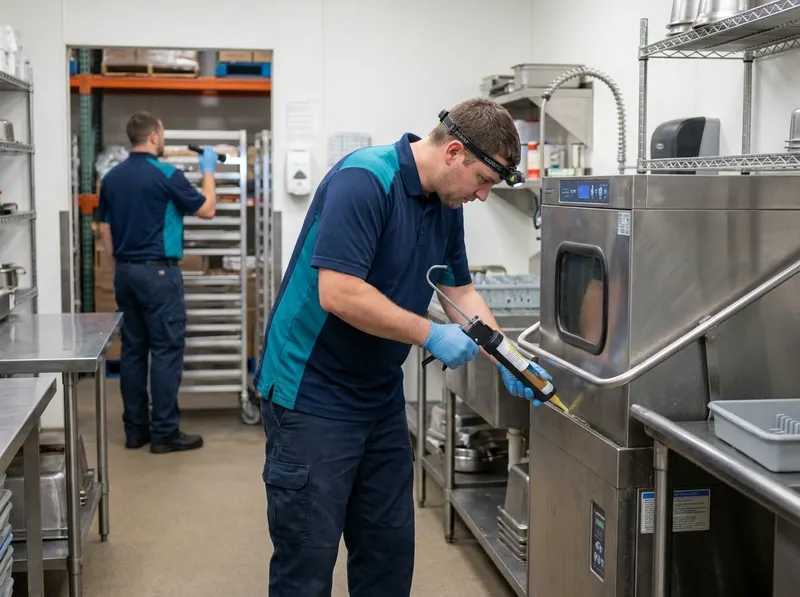
Food handling facilities in the Strip District Market Terminal, Bloomfield, and the South Side Flats encounter high pest pressure caused by older municipal sewer connections, dense row architecture, and continuous freight delivery. Commercial kitchen and warehouse pest defense treats facilities as enclosed ecosystems rather than relying on broadcast chemical sprays. German cockroaches seek microclimates above 70°F inside motor housings, hollow stainless-steel prep tables, and dish line drop-ceilings. Norway rats exploit floor sink gaps and worn rubber dock seals along heavy distribution lines. Establishing control requires physical barrier construction: expanding copper mesh into masonry voids, sealing pipe escutcheons with silicone-carbide compounds, and applying biological foam inside floor drains to break fly larvae feeding cycles.
Industrial storage facilities in Lawrenceville and East Liberty face distinct containment challenges involving open pallet yards and continuous loading-bay operation. Facilities operating above 10,000 square feet require non-toxic perimeter defense, including tamper-resistant exterior rodent stations positioned every 40 to 50 linear feet along building foundations. When inventory includes grain, flour, or processed dry foods, targeted pheromone monitoring traps pinpoint Indianmeal moth activity before reproduction crosses shipment pallets. Chemical-free mechanical traps inside staging lanes safeguard stored goods while satisfying FDA and Pennsylvania Department of Agriculture compliance guidelines without risking inventory adulteration.
Selecting treatment scope depends on facility use-cases. Standard monthly spray contracts deposit temporary chemical residues that degrade within 14 days under industrial high-temperature floor washing. A dedicated structural defense program pairs mechanical exclusion with targeted crack-and-crevice insect growth regulators (IGRs), establishing suppression that remains active across 90-day maintenance cycles. Structural exclusion carries a higher upfront labor cost during initial sealing, but it permanently eliminates harborages in historic brick foundations, minimizing recurring product losses and protecting health safety scores.
Every job gets a firm, written price after a free on-site visit.
Tell us about your commercial kitchen and warehouse pest defense job in Pittsburgh and we'll send a clear, written quote, usually the same day.
 Fentaro Pest Solutions