Subterranean termite soil treatment and colony defense in Pittsburgh addresses the unique subterranean vulnerability of regional housing stock. In older masonry homes throughout Squirrel Hill, Shadyside, and East…
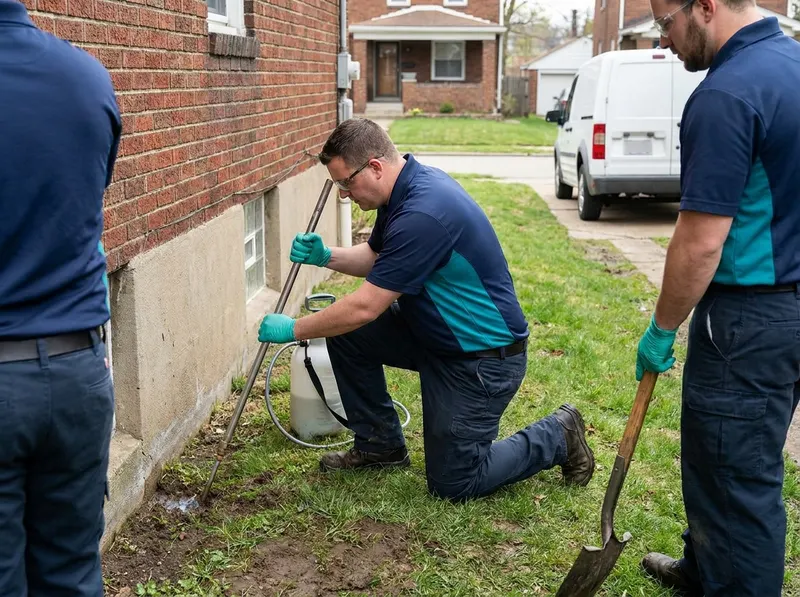
Subterranean termite soil treatment and colony defense in Pittsburgh addresses the unique subterranean vulnerability of regional housing stock. In older masonry homes throughout Squirrel Hill, Shadyside, and East Liberty, rubble-stone foundations and historic brick footers permit subsurface entry paths for Reticulitermes flavipes. Worker termites build earthen mud tubes through microscopic mortar degradation gaps measuring 1/16 of an inch. Liquid soil treatments apply non-repellent chemical termiticide agents at a standardized rate of 4 gallons per 10 linear feet per foot of depth, creating a continuous zone that workers track directly into sub-soil colonies without chemical avoidance.
Selecting liquid trench treatment versus monitoring bait stations depends on foundation architecture and active infestation load. If timber sills or joists in a Bloomfield or Brookline basement already show hollowed galleries and frass, a continuous liquid trench stops active travel immediately by saturating perimeter soil down to the top of the footing. Bait stations rely on delayed foraging cycles that can take 60 to 90 days to achieve complete colony suppression; liquid barriers act immediately upon contact. The trade-off is mechanical disturbance: exterior soil trenches measure 6 inches wide by 6 inches deep, and paved concrete surfaces in South Side Flats courtyards or Mount Washington driveways require 1/2-inch drill holes spaced every 12 inches to reach underlying backfill.
Historic home topography across Pittsburgh complicates continuous protection due to hillside grade shifts and terraced lots. In areas like Lawrenceville or hillside slopes along Mount Washington, street-level runoff and clay-heavy soils can misdirect standard surface applications. Sub-slab injection rods pump liquid barriers under interior basement slabs, perimeter porch stoops, and crawlspaces where rubble stone contacts damp subgrade dirt. Technicians identify hidden plumbing penetrations and cold-pour expansion joints to verify zero uninterrupted voids in the chemical barrier envelope, ensuring subterranean foraging routes remain inaccessible.
Every job gets a firm, written price after a free on-site visit.
Tell us about your subterranean termite soil treatment and colony defense job in Pittsburgh and we'll send a clear, written quote, usually the same day.
 Fentaro Pest Solutions