Older architecture across Bloomfield, Lawrenceville, and South Side Flats relies heavily on rubble-stone, soft brick, and Pittsburgh gray limestone foundations. Decades of freeze-thaw cycles along the Appalachian…
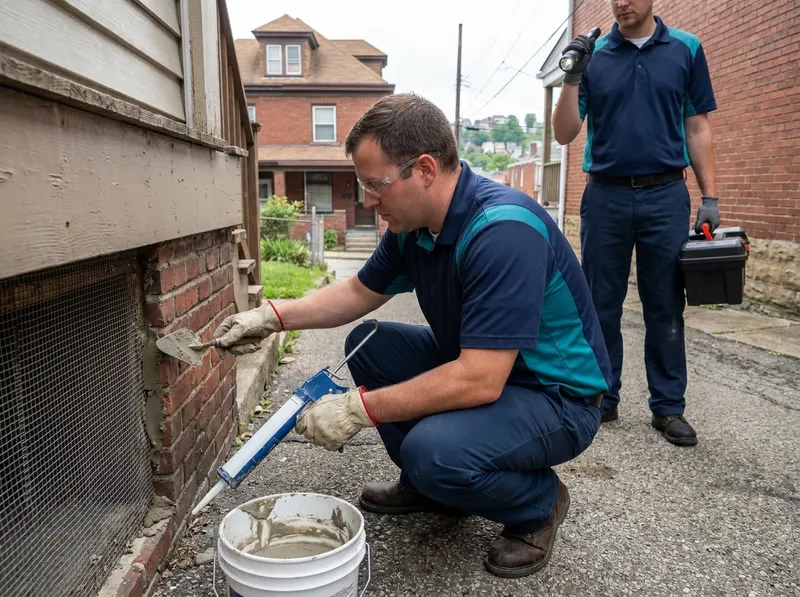
Older architecture across Bloomfield, Lawrenceville, and South Side Flats relies heavily on rubble-stone, soft brick, and Pittsburgh gray limestone foundations. Decades of freeze-thaw cycles along the Appalachian plateau degrade structural mortar, leaving gaps larger than 0.25 inches. Norway rats exploit voids around exterior sub-grade utility lines, while field mice penetrate deteriorating basement window headers beneath street-level porches. Routine broadcast chemical sprays or surface bait boxes fail to address these architectural vectors; exterior poisons simply produce subterranean rodent decay behind interior plaster or beneath tongue-and-groove flooring, drawing secondary carpet beetles and persistent indoor odors.
Targeted remediation prioritizes environmental containment alongside physical carpentry and masonry reconstruction. Technicians seal breached foundation mortar lines with rapid-setting hydraulic cement, expand deep voids with copper mesh core backer, and screw 19-gauge galvanized 0.25-inch hardware mesh across walk-out basement bulkheads, coal chutes, and perimeter weep holes. In hillside settings such as Mount Washington or Brookline, street runoff and steep grades shift foundations, pulling mortar away from exterior sill plates. The trade-off involves labor-intensive structural modification versus quick poison applications; manual exclusion demands mechanical intervention and multi-point sealing, but eliminates seasonal recolonization permanently without introducing secondary toxic hazards into residential living quarters.
Properties in Squirrel Hill, Shadyside, and East Liberty featuring stone foundations alongside brick veneer face unique travel routes through floor joists and plumbing chases leading from basement utility hubs. Interior mechanical snap-trap stations, monitored over 14-day intervals, clear active residents without chemical tracking powders that could contaminate interior ductwork. A single localized basement doorway exclusion differs fundamentally from comprehensive whole-structure masonry repointing: spot remediation secures identified entry breaches under 2 inches, whereas complete crawlspace encapsulation requires complete excavation of degraded limestone mortar, backer rod installations, and concrete flashing. Every intervention adheres to strict physical containment parameters, preserving historic masonry while preventing rodent re-entry.
Every job gets a firm, written price after a free on-site visit.
Tell us about your targeted rodent remediation and masonry exclusion job in Pittsburgh and we'll send a clear, written quote, usually the same day.
 Fentaro Pest Solutions